
“What if … we Could Only Fish Sustainably?”
What if the world fishing industry was limited to fishing sustainably and how would that impact the industry and ecosystems?
What is the current state of the ocean? Is over fishing as big an issue as its made out to be?
Yes! It has detrimental impacts on the ecosystem, leads to loss of species and has a serious effect on communities (MSC, 2019).
The ocean makes up around 70% of the Earth’s surface and is very important in regulating the climate and supplying the oxygen we need to survive. It is also the largest ecosystem on earth and has an extraordinarily diverse range of life (MSC, 2019). There are about 1 billion people worldwide, largely in developing countries who depend on fish as their source of protein, there are also 200 million who are employed by the seafood industry ((FAO), 2018). So as we can see from this we cant stop eating fish altogether or ban fishing to help improve the state of fish stocks, but making all fishing sustainable might have the same effect.
Sustainability
Firstly we must consider what is sustainability and how to do this in the fishing industry.
A definition for sustainable fishing is:
“Sustainable fishing means leaving enough fish in the ocean, respecting habitats and ensuring people who depend on fishing can maintain their livelihoods.” Taken from MSC (MSC, 2019)
MSC is the Marine Stewardship Council and it is a non for profit organisation that is working towards a sustainable fishing industry by recognising and rewarding efforts to protect oceans and ensuring supplies of seafood for the future. The MSC assess fisheries on the health of the fish stock, the environmental impacts of the fishing method and the robustness of the management systems (ABC, 2019).
What makes it unsustainable?
Some companies and some breeds of fish are more sustainable than others as many factors are needed to be taken into account. The Mahi-Mahi fish which is found all around the world, grows up to a meter in the first year and reproduces by 5 months old, so it has all the biological characteristics for a fish to be harvested sustainably (ABC, 2019). However, the issue in many countries is the methods of fishing. Purse seining and long lining are common methods used in over fishing due to the amount of fish caught in a haul, but as a result they have a lot of bycatch. Bycatch as well as over fishing is what makes these methods of fishing unsustainable, due to the amount of other unintended fish species caught as well as other sea mammals and birds (Geographic, 2019). This is why more than just the fish’s biology needs to be taken into account when deciding if it is sustainable.
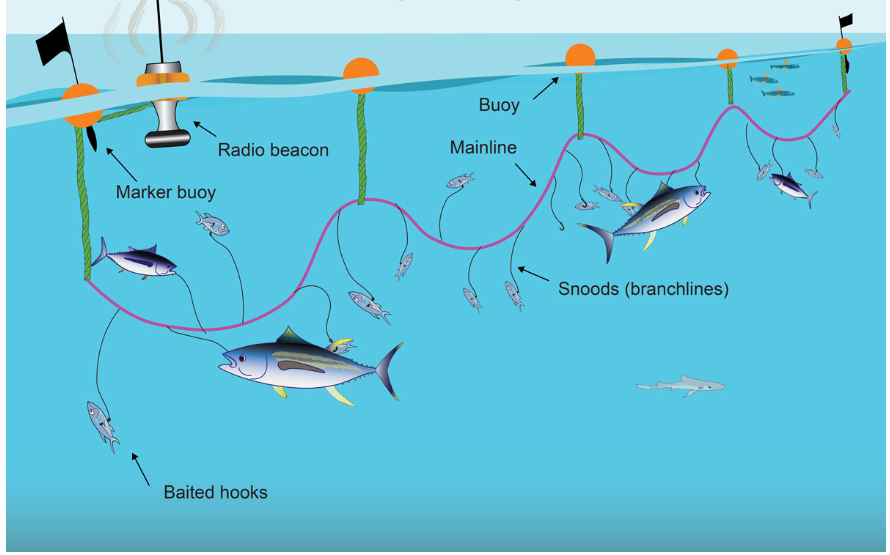
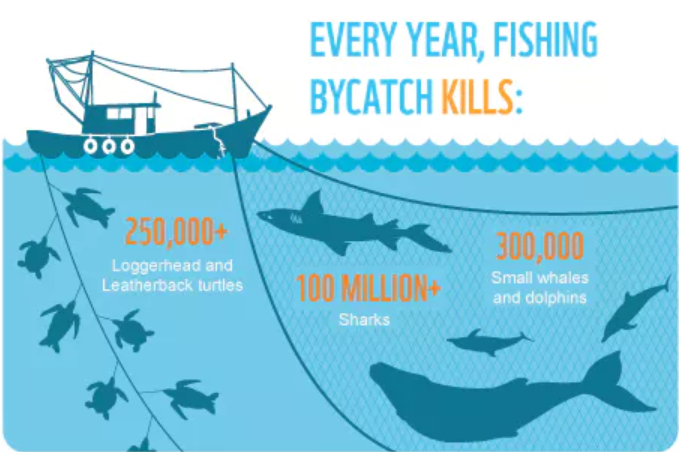
If we only fish sustainably will things improve?
There are many species that have been fished to near extinction over the world and due to the changes in regulation and people campaigning to stop the decline of certain popular fish the over fishing stress on these species was removed, but did it have an impact? The reason behind this “What if?” Scenario was to see if the over fishing was stopped would it have a positive impact and help the oceans ecosystem. It is hard to tell if sustainably fishing or in some cases stopping completely will help, because they may have already devastated the populations. Although, it would most likely have a more positive effect then the situation now where the ecosystem as a whole is under a lot of stress and decline.
Orange Roughy (Deep Sea Perch)
The Orange Roughy is a fish found in the australian and New Zealand waters, they live for over 100 years and because of this they are particularly vulnerable to fishing as they can’t replenish their numbers quickly (ABC, 2019). They were first found in the 1970’s, stocks rapidly crashed soon after due to their high demand. They are now widely known to be avoided by consumers but sometimes miss labeling still leads to the consumption of it, however they are no longer over fished because of the lower demand from consumer knowledge (Fish, 2019). Due to the nature of the Orange Roughy being a deep sea dweller the deep water habitats were also effected from the over fishing, so with the stop of over fishing of them there will hopefully be an improvement of the environment (ABC, 2019). It will be some time until they are seen as sustainable though despite efforts to regulate, this is mainly due to their biology and slow rate or reproduction (Fish, 2019).
Chilean Sea Bass (Patagonian Toothfish)
The Chilean Sea Bass is a long lived slow growing fish that was very popular in The United States in the 90’s, because of this it was drastically over fished due to the high demand. Illegal and over fishing of the Sea Bass lead to lower number of fish caught and the decrease of average sizes, which drew up prices and increased incentive for over fishing. The smaller sizes caught also meant that healthy replenishment of the population became unlikely (Geographic, 2019).
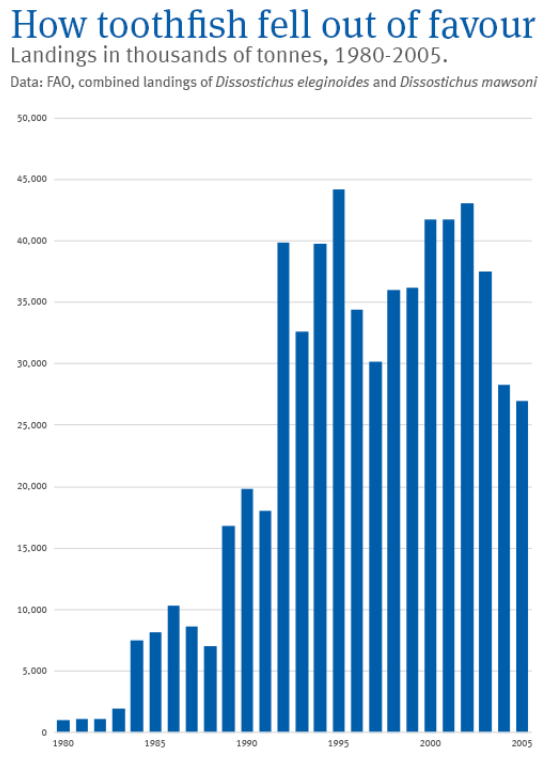
In the 1990’s illegal catches were higher than legal ones and this lead to a campaign to ban Chilean Sea Bass from the menu, with supermarkets stopping the sales of it and more than 700 US chefs working with environmental groups on the campaign to stop the consumption(MSC, 2018).
“You can’t underestimate the importance of collaboration between governments, retailers, scientists and (otherwise rival) fisheries. Although we compete in the marketplace, there’s strong recognition that we need to work together as an industry on the water to overcome bigger issues.”
Martin Exel, former chair of COLTO
By 2015 the illegal fishers or pirates had been narrowed down from over 50 to 6, this had reduced the stress on the Sea Bass population as well as other bycatch such as the albatross. In 2004 the first certified sustainable Chilean Sea Bass fishery was opened and it was back on the menu two years later, with another 6 gaining certification in the following years. Today all pirates of the Sea Bass have been deactivated and the mortality rates of the albatross to almost zero (MSC, 2018). With 6 fisheries now open and working sustainably there must be enough research behind the MSC’s certification to show that the Sea Bass population is no longer under threat and similar changes can be made to other species.
From these two examples you can see that stopping fishing of these species allowed them time to recover so that in the future they can be fished sustainably and once again be back on the market. However, its not fast enough and there are still many illegal fisheries out there, so these need to be stopping to allow the populations to recover before they are devastated.
Ecological and the Ocean’s Ecosystem
To continue utilising fish as a protein source in the future we need to only fish sustainably or the fish populations will be rapidly depleted and the oceans ecosystem destroyed to a point where it will affect us all with repercussions. To be able to know what is sustainable and how much we can fish without overfishing, we need to turn to scientists and data to know what to base the regulations on. These regulations could be based on specific knowledge of species histories, migration patterns or other biological information (Geographic, 2019). Due to this information and data changing over time and new technology effecting how we can manage fisheries, the definition of sustainable needs to be constantly changing and reassessed. This is currently being done with companies like MSC, who make the companies go up for reassessment each year and suspend their sustainable assessment if necessary until they make the correct changes (MSC, 2019).
Ecosystem Services
To be able to make fishing sustainable research on the oceans ecosystem is very important to know the effect of losing critical aquatic life such as the seagrass or coral and how this impacts the ecosystem as a whole. We may not regularly think of the additional services the oceans ecosystem has that impact us on land, because they may not be apparent in every day life unlike the once on land that we regularly observe. However, the ocean has a large impact on us and helps with carbon dioxide removal from air, prevention of storm surge and helps with water quality.
Seagrass
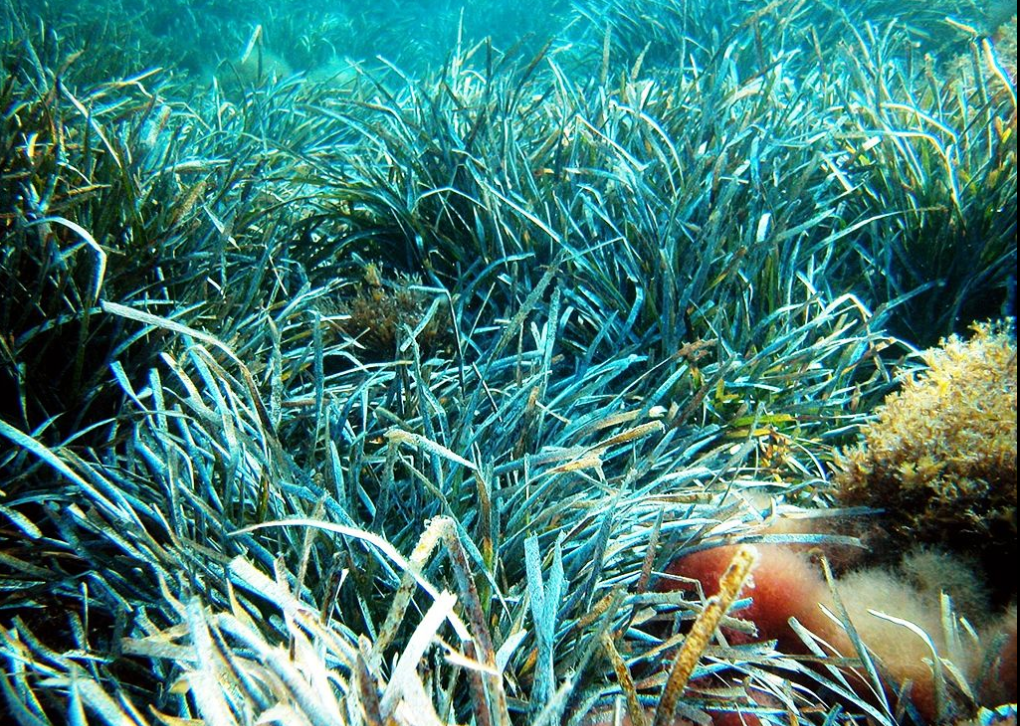
The sea grass has a large impact on the oceans ecosystem and provides coastal zones with many ecosystem goods and services, by altering the ecosystem around them. As well as seagrass assisting in oxygenating the environment around them which helps for provide a hospitable environment for the sediment dwelling organisms, this oxygenation also provides more than 10% of the oceans carbon storage (Wikipedia, 2019c). In fact seagrass stores 83,000 tonnes of carbon per sqkm, which is more than double the amount than a rainforest can in the same area (WWF, 2015), this goes a long way to reducing the elevated carbon levels globally. Seagrass also helps provide a service to the shore line that it is on by having a network of roots that provides stabilisation of sediment and helps reduce coastal erosion and storm surges. It also helps with water quality issues and by removing heavy metals from the water and other pollutants, aswell as providing a habitats for many species. Despite the many benefits of seagrass to us and the obvious importance it has to the oceans eco system it is depleting due to human disturbance from mechanical destruction and overfishing (Wikipedia, 2019c) and there has been a 30% decline in the last century (WWF, 2015).
Mangroves
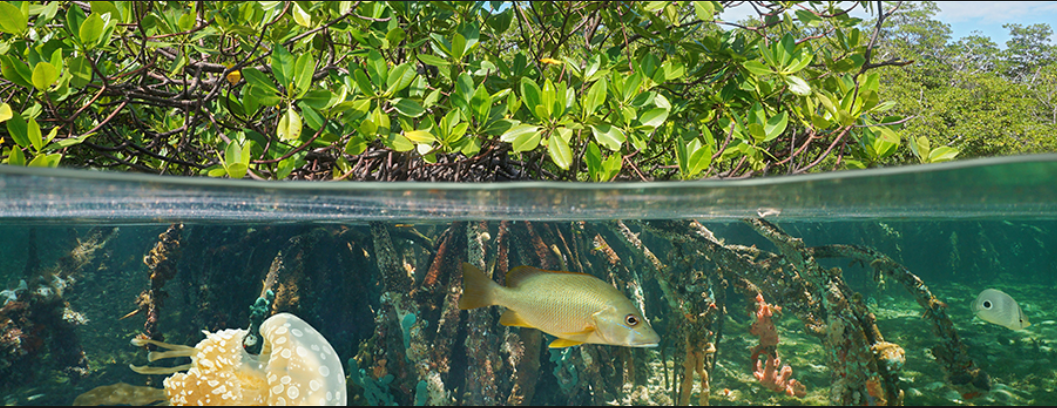
Mangroves provide similar services to the ecosystem as seagrass in the way that they provide shore line protection, in the form of erosion prevention as well as dissipating wave energy with their massive root system. The complex root system has its own unique ecosystem that protects young organisms and allows them to thrive (Wikipedia, 2019b). However, due to developers and destruction during overfishing, they are greatly affected with 20% of the global cover lost from 1980 to 2005 (Wikipedia, 2019a).
Coral Reefs
Coral reefs all over the world are in decline which will have a catastrophic impact on the ecosystem as over 25% of all marine life rely on these reefs to survive. There will also be a greater impact to the people who depend on fishing as their livelihood, with the decline of coral reefs there will be about 850 million people worldwide directly effected by this loss in an economic, social and cultural way (WWF, 2015). Coral reefs are directly affected by global warming due to ocean warming and acidification, this could lead to a loss of coral reefs by 2050 if drastic changes aren’t made (WWF, 2015).
Ecologlogical Engineering Business Case
As we can see from the effects over fishing are having on the fish populations and the larger ecosystem as a whole, something drastic needs to be done before the effects are irreversible. We need to only allow fisheries to fish sustainably and put further emphasis on governing bodies who fish in a specific region to work together to stop over fishing. We rely on the ocean’s ecosystem more than we relies in some cases so we have to stop having such a damaging impact on it. For example instead of developing the land and putting in storm breaks, take example from nature and use mangroves plantations to act as a buffer region for storm surges, help decrease erosion and in the process encourage smaller sea life habitats and ecosystems. There needs to be more projects that use ecological design principles and take inspiration from natural systems, so we stop having a negative impact on ecosystems and instead use these to our advantage.
References
(FAO), F. A. A. O. O. T. U. N. 2018. The State of World Fisheries and Aquaculture 2018 In Brief.
ABC. 2019. Is your favourite seafood sustainable? here’s how to tell [Online]. Available: https://www.abc.net.au/news/science/2019-03-23/sustainable-seafood-what-are-the-options/10912830 [Accessed 29.4.19].
FISH, G. F. B. 2019. Orange Roughy [Online]. Available: https://goodfishbadfish.com.au/?fish=orange-roughy [Accessed 30.4.19].
GEOGRAPHIC, N. 2019. Sustainable Fishing [Online]. Available: https://www.nationalgeographic.org/encyclopedia/sustainable-fishing/ [Accessed 29.4.19].
INTERNATIONAL, R. C. 2018. Overfishing: what is Bycatch? [Online]. Available: https://reefci.com/2018/02/16/overfishing-what-is-bycatch/ [Accessed 1.5.19].
MSC. 2018. Back on the Menu [Online]. Available: http://patagonian-toothfish-story.msc.org/ [Accessed 30.4.19].
MSC. 2019. What is Sustainable Fishing? [Online]. Available: https://www.msc.org/what-we-are-doing/our-approach/what-is-sustainable-fishing [Accessed 29.4.19].
NORMILE, D. 2016. Some Relief for Great Barrier Reef [Online]. Available: https://www.sciencemag.org/news/2016/09/some-relief-great-barrier-reef [Accessed 1.5.19].
UNESCO. 2019. International Day for the Conservation of the Mangrove Ecosystem [Online]. Available: https://en.unesco.org/commemorations/mangroveday/2018 [Accessed].
WIKIPEDIA. 2019a. Green Wall [Online]. Available: https://en.wikipedia.org/wiki/Green_wall [Accessed 20.3.19].
WIKIPEDIA. 2019b. Mangrove [Online]. Available: https://en.wikipedia.org/wiki/Mangrove [Accessed 29.4.19].
WIKIPEDIA. 2019c. Seagrass [Online]. Available: https://en.wikipedia.org/wiki/Seagrass [Accessed 30.4.19].
WWF. 2015. Living Blue Planet [Online]. Available: http://assets.wwf.org.uk/custom/stories/living_blue_planet/ [Accessed 28.4.19].
Word Count: 1975
 Adapt
Adapt 