Importance of our Infrastructure
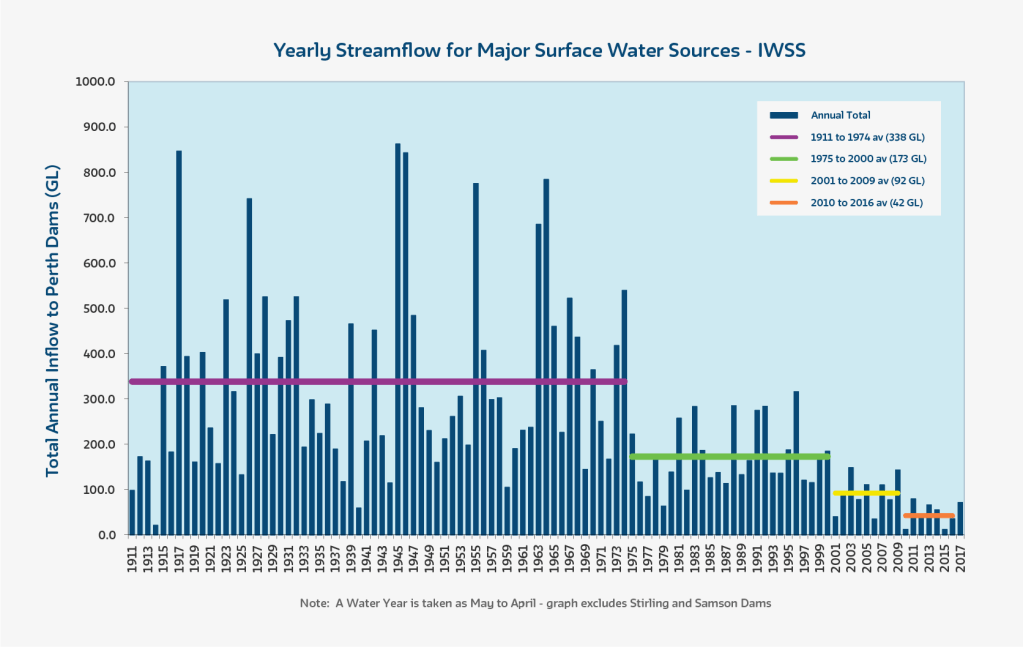
As we know there isn’t always enough rainfall to accommodate and provide drinking water for the growing population, therefore over the years there have been new additions to infrastructure to address these issues. In Western Australia there are two desalination plants that help provide the required water to the population, these plants are additional water supply on top of the ground and dam water. Water is a critical asset, so to make sure that there wouldn’t be any shortages due to lower rainfall, we have had to change how we source our water over the last couple of decades. This is a very important part of advancing technology and making sure there is always innovation and advancements in our infrastructure to make things are done efficiently and the people are getting what they require.
Legislation and Policy
In Perth we get our water from different sources, but why is that? Other than the obvious reason of it doesn’t rain all year round, we cant keep taking to much water from the aquifers and dams because it is having detrimental effects on the environment. If we over draw water from our naturally occurring sources then these sources aren’t available for the surrounding environment and ecosystems that rely on them as their main source of water.
There are many sustainability issues associated with the over use of groundwater as it is a big issue in Australia, due to reliance on dams decreasing over the years because of climate change. There have been two pivotal events in the water legislation, because we had to change how we source our water, these are:
- the Council of Australian Governments (COAG) adopting a Water Reform Framework in 1994
- COAG establishing the National Water Commission (NWC) and an Intergovernmental Agreement on a National Water Initiative (NWI) in 2004
These were important changes because it led to Australian governments’ agreeing to have a more cohesive approach to how we manage water and have sustainability in mind when it comes to where we source our water from.
For example; although WA still has a high reliance on ground water, there was a campaign to make Perth’s water supply climate independent. Which basically means we are relying on other sources so that when rainfall is low we wont use dams as a source. Campaigns like this and water wise education are examples of social constructs that limit our water usage, another example is having restrictions on watering days.
The problems we are Facing
It is good to put new infrastructure in place but even with the new desalination plants they require a lot of energy to be used, as well as wastewater treatment plants. However, they are required infrastructure because everybody needs clean water and sanitation. So we need to continue coming up with new ways to integrate our system and ensure that our supply and treatment is sustainable.
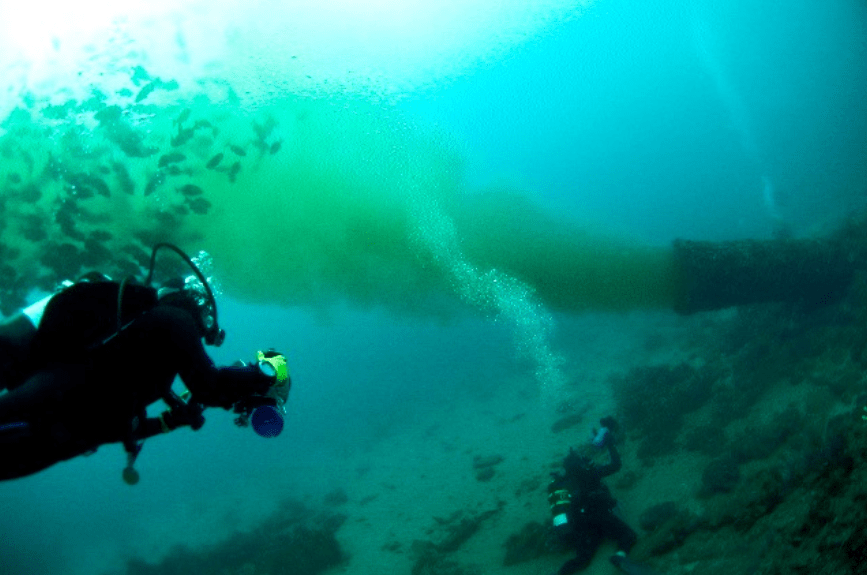
Our wetland ecosystems near dams and living streams aren’t just suffering form lack of rainfall, but also from chemicals and plastics that are in storm water and run off into these places. Also our wastewater plants release the water via ocean outfalls, which affects of water and the life in the surrounding the area. This is why we need better regulations in places and more knowledge on the contaminants that are making there way into the natural water ways from wastewater.
There is also another critical issue in Europe and other areas from the combined overflow system used in their sewers. This allows sewage to make its way into water ways that are open to the public and environment, which is an obvious pollution issue and health risk.
Potential Solutions
Changes need to be made to the legislation and policies all over the world so that we are not over using our resources, we need policies in place to ensure we don’t over use without having a plan on how to replenish them. There is also issues all over the world with lack of sanitation and clean water in 3rd world countries, but also the allowable level of wastewater that is making its way into waterways all over the world. There needs to be a more integrated approach to how we make these legislations because the issues we are facing are not just effecting one country but all of us as a whole. By releasing out waste into ocean outfall this doesn’t just solve the problem because you can no longer see it, this creates larger on going problems as it effects the oceans ecosystem and eventually finds its way back to us.
An example from a similar issue is over fishing. Over fishing is a large problem and is obviously effect more than just effecting that fishs’ species, but the whole food chain and oceans’ ecosystem. some of the ways this problem is being solved is by introducing laws on number of fish caught, the size and time of year, these are to make it more sustainable so that we don’t reduce the population past a point where it will be able to come back. The way this was achieved in many areas was by not having individual laws but by area and fish species, so the counties around the region came together to integrate their legislation of how they could fish and also the fines involved with not complying. This is a good way to solve this problem because it gets the legislation integrated and consistent for the same area and it also holds people accountable because there are others enforcing the policy.
Smart Cities and the Future
So by integrating our legislation and having universal policies that are up held by a body that has more than just one nations agenda in mind is a good way to start putting the world first and have more sustainable and environmentally focused policies.
Making sure that new developments have to include a certain number of sustainable solutions is a great way to ensure that they have a positive impact on the area and help reduce water usage and effects of wastewater.
Building developments with living streams is a great way reduce the environmental impact to the ecosystem by providing natural decontaminants from the plants. Having living streams also helps the area reduce water usage from irrigation because it uses the storm water and run off to sustain the plants.

Thanks for checking out my blog, more on this topic can be found in the hyperlinks or references below.
References
Click to access srt-d4-stormwater-management.pdf
https://www.watercorporation.com.au/water-supply/our-water-sources/groundwater
Click to access next_generation_fisheries_ARMA.pdf
https://www.wwf.org.au/what-we-do/oceans/overfishing#gs.0t3e80
https://www.foreground.com.au/environment/perths-drying-climate/
Click to access IWA_Brochure_Water_Wise_Communities_SCREEN.pdf
Click to access Chilean_Sea_Bass_fact_sheet.pdf
https://www.msc.org/what-we-are-doing/our-approach/what-is-sustainable-fishing
 Adapt
Adapt 